Stocks vs Bonds vs ETFs: 7 Powerful Differences Every Beginner Must Understand
Investing can feel like stepping into a maze without a map. You hear words like stocks, bonds, and ETFs tossed around, and it all seems overwhelming, but here’s the truth, these are just different ways to put your money to work.
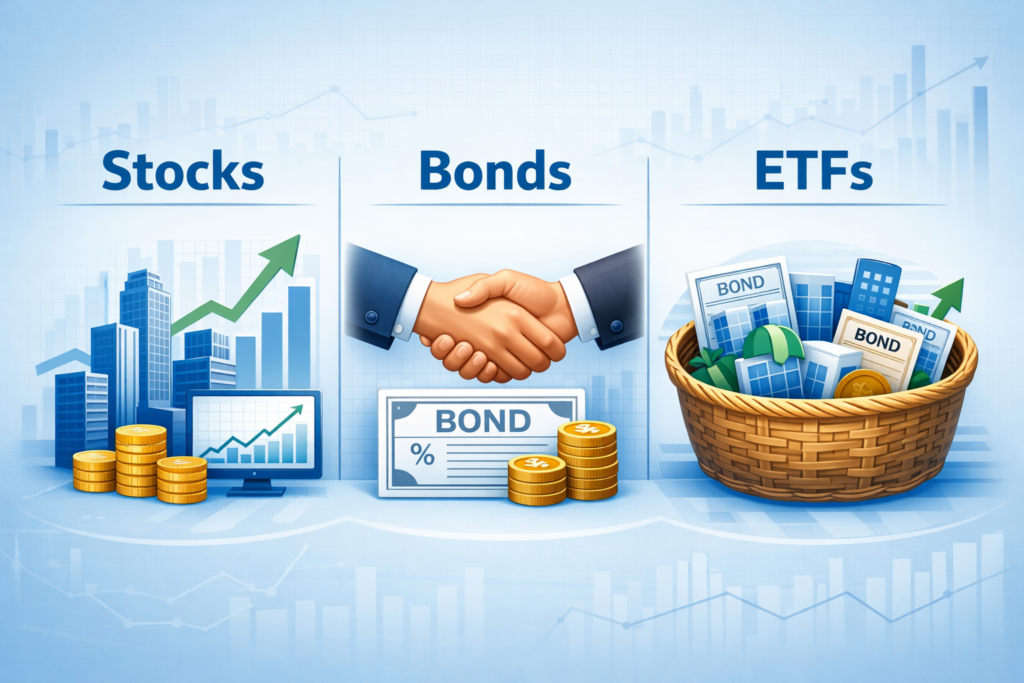
Stocks give you a slice of ownership in a company, bonds let you lend money in exchange for interest, ETFs bundle multiple investments into a single package, making diversification simpler.
Knowing how each works is key to building lasting wealth. By the end of this guide, you’ll clearly understand stocks, bonds, and ETFs, how they generate returns, the risks they carry, and how beginners can use them to craft a balanced investment portfolio.
What Is a Stock?
A stock represents ownership in a company, when you buy shares, you’re purchasing a small piece of that business. As the company grows, innovates, or increases profits, your shares can rise in value, giving you the potential to earn returns.
Think of it like owning a slice of a pizza, the more the pizza grows in size (the company’s value), the larger the piece you hold becomes in terms of worth. For example, if a company is divided into one million shares and you buy 100 shares, you own a tiny fraction of the business, small, but still a stake in its success.
Stocks are traded on stock exchanges, such as the New York Stock Exchange or Nasdaq, where millions of investors buy and sell shares every day. Many well-known companies have shareholders all over the world, from individual investors to large institutional funds.
How Investors Make Money From Stocks
Investing in stocks offers two primary ways to make money: price appreciation and dividends.
1. Price Appreciation
Price appreciation occurs when the stock’s market value rises. If the company performs well, investors are willing to pay more for its shares.
For example:
You buy a stock for $50 per share.
Over time, the stock rises to $80 per share.
Your profit is $30 per share.
Multiply that across multiple shares, and your gains can compound quickly over time. This is why long-term investors often focus on holding quality stocks for many years rather than trying to make quick profits.
2. Dividends
Some companies share a portion of their profits with shareholders through dividends, which are typically paid quarterly.
For example:
You own 200 shares of a company.
The company pays $1 per share in dividends.
You receive $200 in cash, without selling any shares.
Dividend-paying stocks are popular among investors seeking passive income, such as retirees or those building long-term wealth.
Why Stocks Can Be Powerful Investments
Stocks have historically delivered some of the strongest long-term returns among major asset classes. They allow investors to participate directly in business growth, innovation, and economic expansion.
When a company develops new products, enters new markets, or increases profits, shareholders benefit through rising stock prices or dividends. This potential for growth is why stocks are often the foundation of wealth building strategies, particularly for investors with longer time horizons.
Risks of Stocks
Stocks carry higher risk than many other investments, which is the flip side of their high growth potential. Prices can rise quickly, but they can also fall just as fast.
Several factors can influence stock performance:
Economic conditions: A slowing economy can reduce corporate profits, pushing stock prices lower.
Company performance: Poor management decisions or declining sales can hurt stock value.
Interest rates: Higher rates can make borrowing more expensive for companies, affecting growth.
Market sentiment: Investors’ emotions and trends can drive price swings.
Global events: Political instability, pandemics, or international conflicts can affect markets.
Individual companies can also fail. If a business goes bankrupt, shareholders may lose all or most of their investment. Because of this risk, relying on a single stock is rarely a good strategy. Diversification, or spreading investments across multiple companies and sectors, is critical to reduce risk.
What Is a Bond?
A bond is essentially a loan you give to a government, corporation, or institution. When you buy a bond, you are lending money in exchange for interest payments and a promise that the original loan (the principal) will be repaid on a future date.
If stocks represent ownership, bonds represent lending. They are generally considered more stable than stocks, though they come with their own set of risks.
How Bonds Work
A typical bond has three main components:
1. Face Value
This is the amount the borrower promises to repay when the bond matures. Most bonds are issued in $1,000 units, making it simple for individual investors to participate.
2. Interest Rate (Coupon)
The coupon rate is the interest paid to bondholders, usually annually or semi-annually.
Example:
You buy a $1,000 bond with a 4% coupon rate.
Each year, you receive $40 in interest.
3. Maturity Date
The maturity date is when the bond issuer repays your principal. Bonds can mature in a few years or several decades, depending on their type and purpose.
Types of Bonds
Bonds are issued by different entities, each with varying risk and return profiles.
Government Bonds
Issued by national governments, these bonds are generally considered very safe. In the U.S., Treasury bonds are backed by the federal government and are often called “risk-free” for credit risk purposes.
Municipal Bonds
Local governments issue municipal bonds to fund public projects, like schools or infrastructure. They sometimes offer tax advantages, such as being exempt from federal or local income taxes, making them attractive to certain investors.
Corporate Bonds
Companies issue corporate bonds to raise funds for expansion, acquisitions, or operations. Corporate bonds generally pay higher interest than government bonds but carry greater risk, as a company can default if its finances weaken.
Why Investors Use Bonds
Bonds are popular because they provide stability and predictable income:
Predictable income: Regular interest payments can supplement cash flow.
Lower volatility: Bond prices generally fluctuate less than stocks.
Capital preservation: They can protect a portion of a portfolio from market swings.
Many investors use bonds to balance the risk of stock holdings. For example, retirees often allocate a larger portion of their portfolios to bonds because they prefer steady income and reduced exposure to market volatility.
Risks of Bonds
Although generally safer than stocks, bonds are not without risk. Common bond risks include:
1. Interest Rate Risk
When interest rates rise, existing bonds with lower rates become less attractive, causing their market prices to fall.
2. Inflation Risk
Rising inflation can reduce the real value of interest payments, eroding purchasing power over time.
3. Credit Risk
If the issuer cannot meet interest or principal payments, investors may lose money. While government bonds have very low credit risk, corporate bonds can vary widely depending on the company’s financial strength.
What Is an ETF?
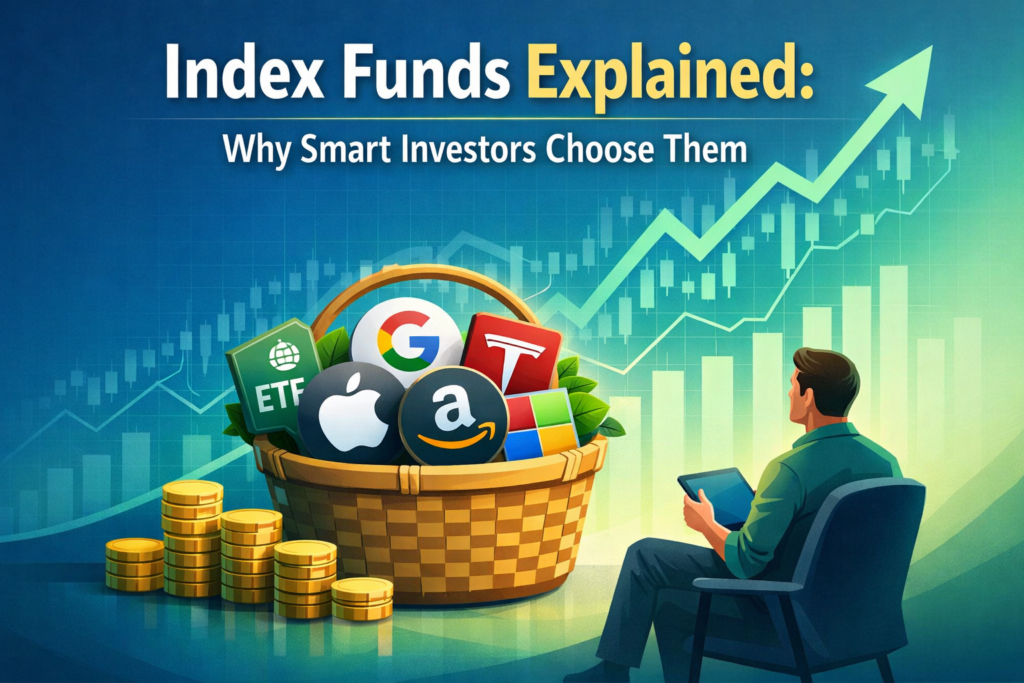
An ETF, or Exchange Traded Fund, is a type of investment fund that holds a diverse collection of assets including stocks, bonds, or commodities. Instead of buying individual securities one by one, investors can purchase a single ETF that represents dozens, hundreds, or even thousands of investments.
ETFs trade on stock exchanges just like individual stocks. This means you can buy and sell them throughout the day at market prices, giving you flexibility and liquidity that traditional mutual funds may not offer.
How ETFs Work
ETFs pool money from many investors into a single fund. A professional fund manager then uses this capital to purchase assets according to a defined strategy.
For example, an ETF might track a major market index like the S&P 500. In that case, the ETF holds shares of hundreds of large companies that make up the index. By buying a single share of the ETF, you effectively gain exposure to all those companies at once, rather than buying each stock individually.
This pooling of investments allows even small investors to achieve instant diversification, which helps reduce risk while participating in market growth.
Why ETFs Are Popular
ETFs have grown rapidly in popularity among investors for several key reasons:
1. Instant Diversification
Rather than relying on the performance of a single company, ETFs give exposure to many assets simultaneously. This reduces the impact of poor performance from any single security and helps balance risk across the portfolio.
2. Lower Costs
Many ETFs charge very low fees, often much lower than traditional mutual funds. Lower costs mean more of your money stays invested, giving compounding more room to work over time.
3. Flexibility
Because ETFs trade like stocks, investors can buy or sell during market hours, place limit orders, and even use margin or short strategies in certain cases.
4. Transparency
Most ETFs regularly disclose their holdings, so investors always know exactly what assets they own. This level of transparency builds confidence and makes it easier to align your investments with your goals.
Types of ETFs
There are thousands of ETFs covering almost every corner of the financial markets. Some of the most common categories include:
Stock Market ETFs
These ETFs hold collections of stocks and often track major indexes or specific sectors. For example, a technology ETF may contain large tech companies, while a broad market ETF might track the entire U.S. stock market.
Bond ETFs
Bond ETFs contain multiple bonds and offer income and stability similar to individual bonds. By investing in a bond ETF, investors can access a diversified set of debt instruments without buying each bond individually.
Sector ETFs
These focus on specific industries, such as healthcare, energy, or financial services, allowing investors to target growth in areas they expect to outperform.
International ETFs
International ETFs provide exposure to markets outside the investor’s home country. They allow participation in global economic growth and can diversify currency and market risk.
Commodity ETFs
Commodity ETFs track physical assets like gold, oil, or agricultural products. These are often used as a hedge against inflation or to further diversify a portfolio beyond traditional financial securities.
Key Differences Between Stocks, Bonds, and ETFs
Understanding how stocks, bonds, and ETFs differ is essential for building a portfolio that aligns with your goals.
| Feature | Stocks | Bonds | ETFs |
|---|---|---|---|
| Ownership | Partial ownership of a company | Loan to a government or corporation | Basket of assets (stocks, bonds, etc.) |
| Risk Level | High potential returns, higher volatility | Lower returns, more stable | Depends on assets held (can be stable or volatile) |
| Income vs Growth | Primarily growth; some pay dividends | Primarily income | Can offer growth, income, or both |
| Diversification | Single company risk | Single issuer risk | Built-in diversification across multiple assets |
Example: A stock ETF that tracks the S&P 500 will behave similarly to stocks in terms of growth potential and volatility, while a bond ETF will behave more like bonds with income stability.
How Investors Combine These Assets
Most investors don’t rely on a single type of investment. Instead, they build portfolios that mix stocks, bonds, and ETFs to balance growth potential and stability.
Growth-Focused Portfolio
Younger investors with a long time horizon often prioritize growth:
70% stocks
20% ETFs
10% bonds
The higher stock exposure allows for greater long-term growth, though short-term volatility is likely.
Balanced Portfolio
Many investors prefer a mix of growth and stability:
50% stocks
30% ETFs
20% bonds
This provides moderate growth while protecting against large market swings.
Conservative Portfolio
Investors prioritizing safety and income lean toward bonds:
30% stocks
30% ETFs
40% bonds
This structure emphasizes capital preservation and steady income.
Why Diversification Matters
Diversification means spreading investments across different asset types, sectors, and regions. It is one of the most important principles in investing.
Different assets perform differently under varying economic conditions:
Stocks often perform well during periods of strong economic growth.
Bonds typically do better during economic slowdowns.
ETFs simplify diversification by providing exposure to many assets at once, reducing the need to research and manage dozens of individual investments.
Long-Term Investing and Compounding
The most powerful factor in investing is time. Long-term investing allows compound growth to work in your favor, your gains begin generating their own gains over time.
Example:
$10,000 invested at 7% annual return grows to ~$19,671 in 10 years.
If left invested for 30 years, it grows to over $76,000.
Starting early and maintaining a consistent investment strategy often matters more than trying to time the market perfectly.
Choosing the Right Investment for Beginners
For beginners, simplicity is key. ETFs are often the best starting point because they:
Provide instant diversification
Require less research than individual stocks or bonds
Offer flexible, low-cost exposure to the market
Once comfortable, investors can gradually explore individual stocks and bonds to gain more control over their portfolio.
The most important habits are:
Regular investing
Maintaining diversification
Avoiding emotional decision-making
Common Beginner Mistakes
Recognizing pitfalls early can prevent costly errors:
1. Trying to Time the Market
Short-term market predictions are extremely difficult. Consistent long-term investing usually yields better results.
2. Lack of Diversification
Concentrating on a single stock or sector increases risk. Diversified portfolios spread risk and reduce the impact of losses.
3. Ignoring Fees
High fees can significantly erode long-term returns. Low-cost ETFs help minimize expenses and maximize compounding potential.
4. Emotional Investing
Fear and greed often lead investors to buy high and sell low. Maintaining a long-term perspective helps prevent emotionally driven mistakes.
Final Thoughts
Stocks, bonds, and ETFs are the core building blocks of modern investing.
Stocks allow investors to participate in the growth of companies and the broader economy.
Bonds provide steady income and relative stability by acting as loans to governments or corporations.
ETFs offer diversification by combining many investments into a single fund that trades like a stock.
Each asset serves a different role in a portfolio.
Stocks typically drive growth. Bonds provide stability and income. ETFs simplify diversification and access to markets.
The most successful investors understand how these assets work together rather than relying on only one type of investment.
Building wealth through investing does not require complex strategies or constant market predictions.
It requires patience, diversification, consistent contributions, and a long term mindset.
When investors understand the basic differences between stocks, bonds, and ETFs, they gain the foundation needed to make smarter financial decisions and grow their wealth over time.
Related Blog Post:
- How Investing Works for Complete Beginners: 9 Powerful Steps to Start Building Wealth
- Beginner’s Guide to Investing Money Safely: 10 Smart Strategies for New Investors
- Net Worth Explained: 7 Simple Steps to Calculate Yours Today
- 10 Smart Ways to Track Expenses Without Feeling Restricted and Still Enjoy Life
- 21 Personal Finance Basics Every Adult Should Know for Financial Freedom