How Compounding Builds Wealth Over Time: 7 Powerful Secrets to Grow Your Money Faster
What if the biggest secret to building wealth had nothing to do with earning more, timing the market, or chasing the next big investment trend?
Most people assume wealth comes from high income, lucky breaks, or constant grinding. While those factors can play a role, they are not the true engine behind long-term financial success. The real driver is something far more powerful, yet often ignored because it feels too simple: compounding.
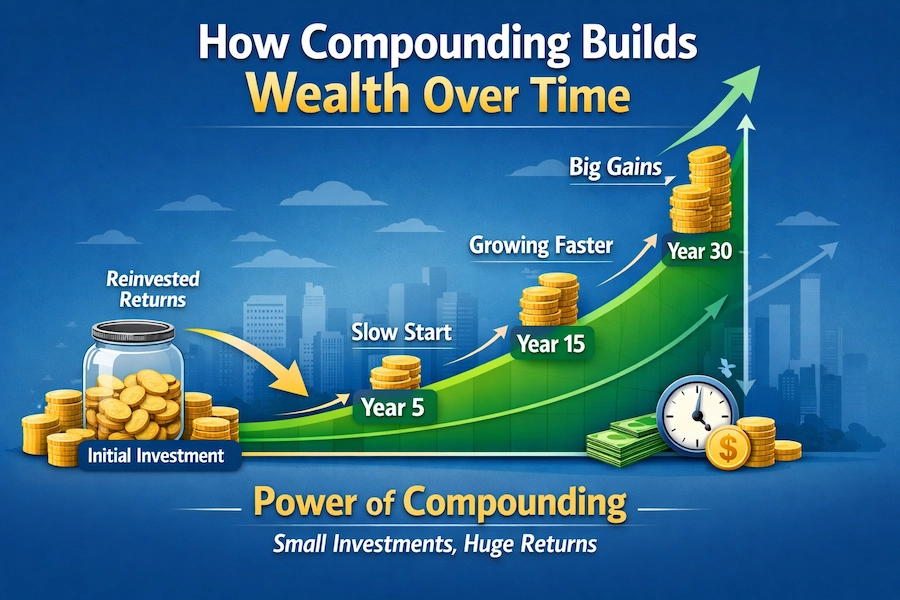
Compounding does not look impressive at first, it does not deliver quick wins or dramatic overnight results. In fact, in the early stages, it can feel like nothing is happening at all but beneath the surface, your money is working, growing, and quietly building momentum. Over time, that slow progress transforms into exponential growth.
This is what makes compounding so powerful, it turns consistency into wealth, it rewards patience over speed and it allows even small investments to grow into something significant if given enough time.
The difference between people who build lasting wealth and those who struggle financially often comes down to one thing, whether they understand and use compounding early enough.
In this guide, you will learn how compounding actually works, why time is more valuable than income when it comes to investing, and how to position yourself so your money starts working for you instead of the other way around.
The Power of Small Habits
You don’t need a huge sum of money to start harnessing the power of compounding, what matters most is consistency, not the size of your investment.
Even small, regular contributions can grow into substantial wealth over time. For example, investing just $100 per month at a 10% annual return can turn into a significant nest egg over several decades. The secret isn’t in making a massive deposit, it’s in making steady, repeated investments and letting time do its work.
This principle shows that building wealth isn’t about occasional windfalls or luck, it’s about creating small, disciplined habits that multiply quietly but powerfully over time.
Compounding in Debt
Compounding isn’t just a friend, it can also be an enemy. While it can grow your investments, it can destroy your finances when applied to debt.
High-interest debt, such as credit card balances, compounds against you, every month, interest is added to your balance, and the next month, you pay interest on that interest. Over time, this snowballs, and what seemed manageable can quickly become overwhelming.
This is why paying off high-interest debt should always come before investing, eliminating compounding liabilities allows your money to work for you instead of against you.
The Psychology of Compounding
Mathematically, compounding is straightforward. Psychologically, it’s much harder.
People often struggle because:
They expect fast results and get discouraged when growth is slow.
They lose patience during periods of minimal visible gains.
They react emotionally to market ups and downs, sometimes withdrawing funds at the wrong time.
Understanding that compounding works over long periods helps you stay disciplined, the real growth happens gradually, and sticking with your plan is what allows the magic of compounding to take effect.
Real-Life Wealth-Building Strategy
To make compounding work effectively, follow a simple but proven strategy:
Start as early as possible: The sooner your money is invested, the longer it has to grow.
Invest consistently every month: small, regular contributions matter more than sporadic large deposits.
Choose growth-oriented assets: stocks, index funds, or other long-term investments generally compound faster than cash.
Reinvest all earnings: dividends and interest should stay invested to maximize compounding.
Avoid unnecessary withdrawals: taking money out interrupts the compounding cycle.
Stay invested long term: patience is critical; compounding accelerates over decades, not months.
This approach may seem simple, but it’s highly effective. It doesn’t require timing the market or chasing trends, just discipline, patience, and consistency.
Common Mistakes That Kill Compounding
Even small missteps can significantly reduce the power of compounding:
- Starting Too Late: Waiting to invest even a few years can drastically reduce your potential growth. Time is the most critical factor in building wealth.
- Withdrawing Early: Pulling funds out interrupts the compounding process. Even small withdrawals can reduce long-term growth by thousands of dollars.
By avoiding these mistakes and following a consistent, long-term approach, you give compounding the best chance to work its magic.
Chasing Quick Gains
One of the biggest mistakes investors make is chasing quick profits. Frequent trading, high-risk bets, or trying to time the market often leads to losses rather than gains. Compounding doesn’t work with short-term thinking; it rewards patience and steady growth.
Even small, avoidable mistakes like selling during a temporary market dip can interrupt the compounding process and slow your long-term wealth accumulation.
Ignoring Fees
Another hidden drain on compounding is investment fees. Management fees, trading commissions, and other costs might seem minor, but over years and decades, they can significantly reduce your returns. Choosing low-cost investment options ensures that more of your money stays invested, allowing compounding to work more effectively.
Lack of Consistency
Irregular investing undermines compounding. Missing contributions or inconsistent investments mean your money isn’t growing as efficiently as it could. Small, consistent contributions even modest amounts are far more powerful than sporadic large investments. Consistency is the real engine behind long-term growth.
Compounding and Financial Freedom
Compounding is the cornerstone of financial independence.
As your investments grow over time, the returns they generate can eventually cover your living expenses. At that point, you no longer depend on a paycheck, you’ve created a self-sustaining financial engine.
This is how many people achieve early retirement or true financial freedom by letting time and compounding work in their favor rather than relying solely on active income.
Visualizing the Long-Term Impact
Think about investing consistently over 30 or 40 years.
In the early years, your contributions form most of your total investment value.
As time passes, the returns from your investments begin to dominate.
Eventually, most of your wealth comes from the compounding growth, not your initial contributions.
This illustrates the real power of compounding, it turns time into one of your most valuable financial allies.
Why Most People Fail to Use Compounding
Despite its simplicity, many never fully benefit from compounding. Common reasons include:
Lack of financial education: not understanding how compounding works.
Short-term thinking: expecting fast results and giving up too soon.
Fear of market fluctuations: reacting emotionally to normal ups and downs.
Spending instead of investing: using funds that could be growing instead of putting them to work.
Recognizing these barriers helps you avoid them and stay on track toward long-term wealth.
Building a Compounding Mindset
To maximize compounding, your mindset is just as important as your strategy. Focus on:
Thinking long-term: ignore short-term market noise.
Being patient: growth may feel slow at first, but momentum builds over time.
Staying consistent: keep investing regularly, even in small amounts.
Ignoring short-term distractions: resist impulsive decisions that can derail growth.
Focusing on steady growth: slow, reliable progress beats chasing quick wins.
Wealth building isn’t about luck or fast money, it’s about sustained, disciplined effort over years and decades. Compounding rewards those who understand this principle and stick with it.
Conclusion
Compounding is more than just a financial concept, it’s a powerful engine for building lasting wealth. It takes small, consistent investments and, over time, transforms them into significant financial growth. The real magic happens when your returns begin generating returns of their own, creating a self-reinforcing cycle that accelerates as years go by.
The principles to harness this power are simple, but they require discipline:
Start early: the sooner you begin, the more time your money has to grow.
Stay consistent regular contributions, even modest ones, are more effective than occasional large deposits.
Reinvest your earnings: letting dividends, interest, or profits compound amplifies growth.
Be patient: compounding takes time; the biggest gains often come after years or decades of steady investing.
You don’t need to predict the markets, chase the latest trends, or take extreme risks to see results. The most important factor is time, the longer your money is invested, the more dramatic the growth.
Applied correctly, compounding can reshape your financial future, turning modest, disciplined actions today into wealth and financial security tomorrow. It’s a simple strategy with profound results, proving that in finance, patience and consistency often beat speed and luck.
By understanding and embracing the principles of compounding, you give yourself the opportunity to grow wealth steadily, achieve financial independence, and create a future where your money truly works for you.
Must Read:
- 10+ Common Investing Mistakes Beginners Make (Avoid These Costly Errors!)
- Long-Term Investing vs Short-Term Trading: 7 Powerful Differences That Shape Your Wealth
- How Risk Tolerance Affects Your Investment Choices: 9 Powerful Strategies Smart Investors Use
- Dollar Cost Averaging Explained: 7 Powerful Examples to Master This Smart Investing Strategy
- Index Funds Explained: 9 Powerful Reasons They Beat Most Investors
- 7 Smart Ways to Start Investing With $100 or Less Today
- Stocks vs Bonds vs ETFs: 7 Powerful Differences Every Beginner Must Understand