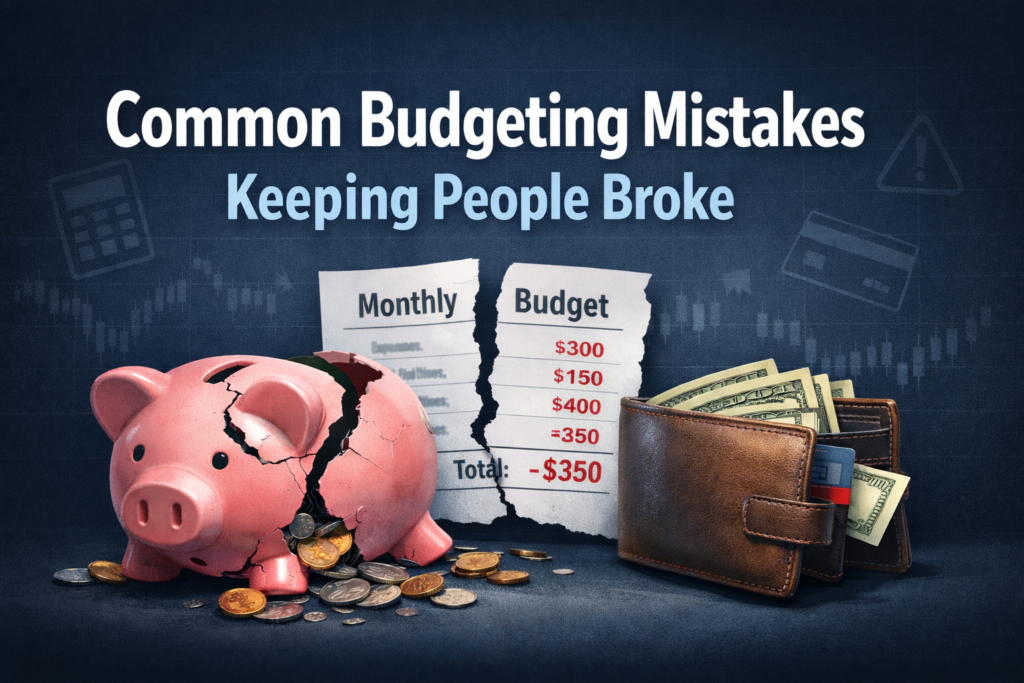
Common Budgeting Mistakes Keeping People Broke in 2026
Most people think their financial problem is not earning enough money, that belief feels logical. It is also one of the biggest lies people tell themselves about money.
Plenty of high earners live paycheck to paycheck, at the same time, many average earners steadily build wealth without dramatic sacrifices. The difference is rarely luck, intelligence, or opportunity, it comes down to behavior.
Budgeting is not about restriction or punishment, it is about control. When budgeting is ignored or done poorly, money does not disappear all at once. It leaks out slowly through habits, emotions, convenience, and unexamined choices. These leaks feel small in the moment, but over time they quietly sabotage progress.
This is why income increases often fail to change financial reality. More money simply magnifies existing habits, without structure, spending expands, stress follows, and the cycle repeats.
The budgeting mistakes below are not extreme or obvious. They are common, socially accepted, and emotionally driven. And that is exactly why they keep so many people stuck.
If you recognize yourself in any of them, it is not a personal failure, it is clarity and clarity is the first real step toward lasting financial change.
1. Believing Budgeting Is Only for Poor People
One of the most damaging myths about money is the idea that budgeting is only necessary when you are struggling. Many people abandon budgeting the moment their income improves, believing they have outgrown the need for structure.
This thinking is completely backwards, the more money you earn, the easier it becomes to lose control of it. Higher income usually comes with higher lifestyle costs, more obligations, more subscriptions, and more financial complexity without a clear plan, spending expands naturally to fill every increase in income. This is how lifestyle inflation quietly takes over.
People who build real wealth do not budget because they are broke, they budget because they understand something most people do not. Money without structure disappears, budgeting protects future freedom.
Budgeting is not a sign of financial weakness or struggle. It is a sign of maturity and long term thinking.
2. Confusing Budgeting With Guessing
Many people believe they have a budget, but what they actually have is a rough idea of their finances. They estimate expenses in their head, round numbers up or down, and hope everything balances out by the end of the month, hope is not a financial strategy.
If you do not track real numbers, you are not budgeting, you are guessing. Guessing creates surprises, surprises create stress, stress pushes people toward credit cards, overdrafts, and borrowing.
True budgeting requires clarity, not optimism. You need to know exactly how much you earn, exactly how much you spend, and exactly where the difference goes. Until you face the numbers honestly, money will always feel tight, even when it should not. Clarity removes anxiety. Vagueness creates it.
3. Not Tracking Small Daily Expenses
Small expenses feel harmless. A coffee here, a ride there, a quick snack, a subscription you barely remember signing up for. Individually, none of these feel like a problem but together, they are.
Most people massively underestimate how much they spend on small, frequent purchases. These expenses rarely feel painful, so they escape attention. Over weeks and months, they quietly consume a large portion of disposable income.
The issue is not enjoying small comforts, the issue is pretending they do not add up.
When someone says their money disappears and they cannot explain where it went, this is almost always the reason.
4. Creating a Budget That Is Too Strict
A budget that leaves no room for enjoyment is guaranteed to fail. Some people approach budgeting like punishment, they cut out all fun, all flexibility, and all convenience in the name of discipline. It works briefly then reality sets in.
After a short period of extreme restriction, people snap. They overspend, feel guilty, and often abandon budgeting entirely. The damage is usually worse than before.
Sustainable budgeting accounts for human behavior, you are not a robot, you will want entertainment, comfort, and occasional indulgence.
A realistic budget plans for enjoyment instead of pretending it will not happen. When spending is intentional, guilt disappears and consistency becomes easier.
5. Ignoring Irregular and Annual Expenses
Many budgets only account for predictable monthly bills, rent, utilities, food, transport and everything else is ignored until it shows up.
Car repairs, medical bills, gifts, school fees, insurance premiums, travel, and emergencies are not surprises. They are predictable events that happen every year.
The surprise is failing to plan for them when these expenses appear without preparation, people panic, panic leads to borrowing, borrowing creates the illusion of a financial emergency when the real issue is lack of foresight.
A strong budget spreads these costs across the year. When you prepare in advance, unexpected expenses lose their power to derail your finances.
6. Treating Savings as Optional
Many people save only if there is money left at the end of the month. There is almost never money left.
When savings are treated as optional, they get sacrificed to impulse spending, convenience, and short term pleasure. Savings become whatever remains, which is usually nothing.
Savings should be automatic and non negotiable when you treat savings like a fixed bill you pay yourself, consistency improves immediately.
Paying yourself first is not a motivational phrase, it is a practical rule that separates people who build wealth from people who only intend to.
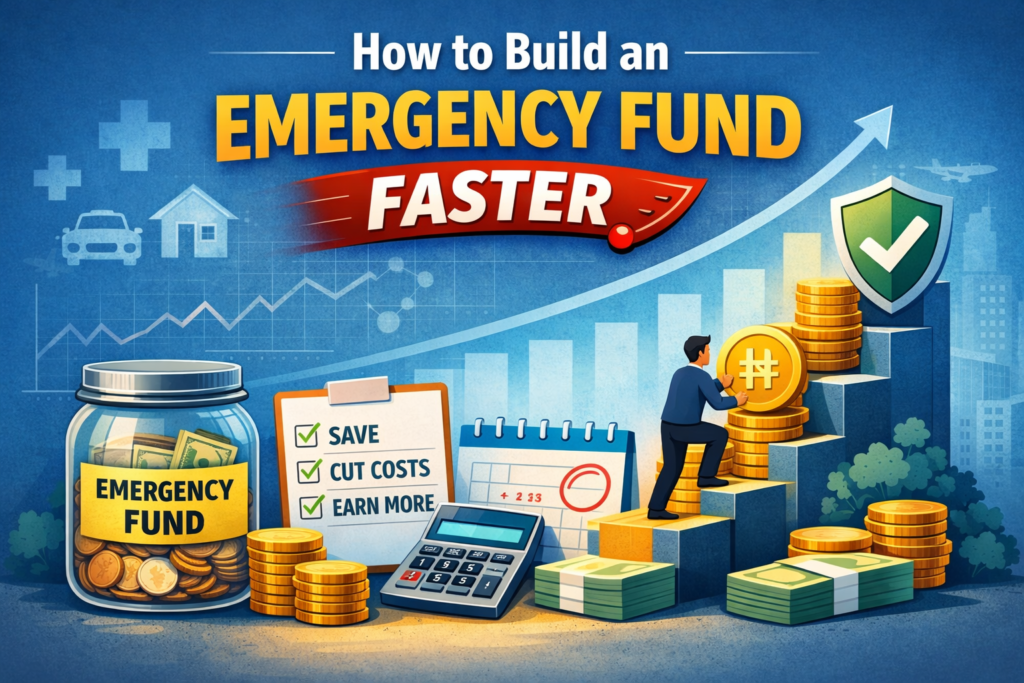
7. Not Having an Emergency Fund
Without an emergency fund, every unexpected expense becomes a crisis. Crises force rushed decisions, and rushed decisions are usually expensive.
People without emergency savings rely on credit cards, loans, friends, or delayed bills. This creates a cycle of financial stress that never fully ends. One problem rolls into the next.
An emergency fund changes everything, it turns disasters into inconveniences, it protects your budget from collapsing when life happens.
Budgeting without emergency savings is like driving fast without brakes. You might move forward, but one sudden stop can cause serious damage.
8. Underestimating Lifestyle Inflation
Lifestyle inflation is one of the quietest ways people stay broke, as income increases, spending often increases even faster. Better phones, bigger apartments, more dining out, more convenience. None of these are inherently bad.
The problem is when every raise disappears without improving your financial position, if your expenses grow at the same pace as your income, you will always feel broke, no matter how much you earn. More money simply creates bigger bills.
Budgeting forces intentional decisions, it helps you choose which upgrades genuinely improve your life and which ones quietly steal from your future.
9. Not Reviewing the Budget Regularly
Life does not stand still, and neither should your budget. Income changes. Expenses shift. Priorities evolve. Yet many people create a budget once and never revisit it.
A budget that is not reviewed becomes disconnected from reality, when that happens, people stop trusting it. They overspend, feel confused, and assume budgeting does not work.
Budgeting is not a one time task, it is a living system. Reviewing it monthly allows you to correct small issues before they turn into serious problems.
Ignoring your budget does not make financial stress disappear. It simply postpones it until the damage is harder to undo.
10. Relying on Credit to Cover Budget Gaps
Using credit to cover overspending feels harmless in the moment, swipe now, deal with it later. Later always comes. When credit fills the gaps in a budget, it hides the real problem instead of fixing it. Minimum payments make debt feel manageable while interest quietly grows in the background.
Over time, yesterday’s overspending becomes tomorrow’s obligation. Debt limits choices, reduces flexibility, and increases stress.
A budget that depends on credit is not a budget. It is a delayed bill with consequences.
11. Not Aligning the Budget With Personal Values
Many people build budgets based on what they think they should value instead of what they actually value.
They cut spending in areas they genuinely enjoy while overspending in areas that bring little satisfaction, often due to habit, comparison, or social pressure. This creates frustration and constant failure.
A good budget reflects real priorities, if travel matters to you, plan for it. If comfort matters, account for it. If freedom matters, prioritize savings and investments.
When your budget aligns with your values, discipline stops feeling forced. It starts feeling logical.
12. Ignoring Income Growth Opportunities
Budgeting is not just about cutting expenses, it is also about expanding capacity.
Some people focus entirely on reducing costs while ignoring opportunities to earn more. This creates a ceiling on progress, you can only cut expenses so far. Income, on the other hand, has far more room to grow.
A smart budget allocates resources toward skills, education, and opportunities that increase earning potential. This might mean courses, tools, certifications, or time invested in side projects.
This is how budgeting moves from survival to long term growth.
13. Comparing Your Budget to Other People’s Lives
Comparison is financial poison, social media shows lifestyles, not balance sheets. People who appear successful may be drowning in debt behind the scenes.
When you budget based on what others seem to afford, you lose control. Spending shifts from purpose to performance. Money becomes a tool for validation instead of progress.
Your budget exists to support your life, not your image. Wealth grows quietly. Broke looks loud.
14. Failing to Set Clear Financial Goals
Budgeting without goals feels empty. When there is no clear reason behind the numbers, motivation fades quickly.
Goals give structure and meaning to budgeting. Emergency funds, investments, debt freedom, business capital and home ownership. These are not vague ideas, they are destinations.
When you know what you are working toward, budgeting stops feeling restrictive, it becomes empowering. Direction creates discipline.
15. Expecting Perfection Instead of Progress
Many people quit budgeting after one bad month, they overspend, feel guilty, and abandon the system entirely. This is unnecessary and counterproductive.
Budgeting is not about perfection, it is about awareness and adjustment. Mistakes are part of the process, what matters is noticing them and continuing.
Progress compounds over time, consistency matters far more than flawless execution.
The Psychological Side of Budgeting
Money is emotional. Budgeting exposes habits, fears, and beliefs formed over years. Avoidance, denial, and impulse spending are often emotional responses, not logical ones.
If spending is used to cope with stress, boredom, or pressure, no spreadsheet alone will fix the issue. A strong budget accounts for psychology, it creates boundaries without shame and flexibility without chaos. It works with human behavior, not against it.
Why Most People Stay Broke Despite Earning More.
Income alone does not create wealth, behavior does.Without budgeting, more money simply magnifies existing habits, poor habits become more expensive, good habits become more powerful.
Most people do not stay broke because they are lazy or unintelligent, they stay broke because they never build systems that protect them from their own impulses. Budgeting is that system.
How to Fix These Mistakes Starting Today
You do not need a perfect budget, you need an honest one. Track your expenses for one month without judgment, identify leaks. Treat savings as non negotiable, prepare for irregular expenses, allow room for enjoyment, review and adjust regularly.
Small improvements create momentum, momentum builds confidence, confidence creates consistency, consistency builds wealth.
Final Thoughts
Being broke is not always the result of low income, more often, it is the result of operating without structure. When money has no direction, it disappears, no matter how much comes in.
Budgeting is not about saying no to everything you enjoy, it is about deciding what actually deserves a yes. It gives your money purpose instead of letting convenience, emotion, or pressure make decisions for you.
The people who escape constant financial stress are not necessarily the highest earners. They are the ones who know where their money goes, why it goes there, and what it is meant to build. They replace reaction with intention.
Money itself is neutral, it only amplifies habits, budgeting is the skill that turns money from something that controls you into something you control.
Once you understand that, financial progress stops feeling random. Stability stops feeling fragile. And staying broke stops being a condition you accept and becomes a pattern you consciously leave behind. That is not motivation, that is structure.
Related Blog Post:
- Personal Finance Guide for Building Wealth in 2026: 18 Proven Strategies That Work
- Create a Budget That Works in the US & UK: 9 Easy Steps That Save Money
- How to Build an Emergency Fund Faster: 15 Proven Steps That Actually Work
- Top 25 Best High‑Yield Savings Accounts in the US, UK & Canada
- How Much Cash Should You Keep vs Invest: 7 Smart Strategies for Financial Security